Stinging insect nest extraction serves as an architectural perimeter containment measure rather than an indiscriminate surface treatment. When aerial colonies or subterranean species colonize building envelopes, simple…
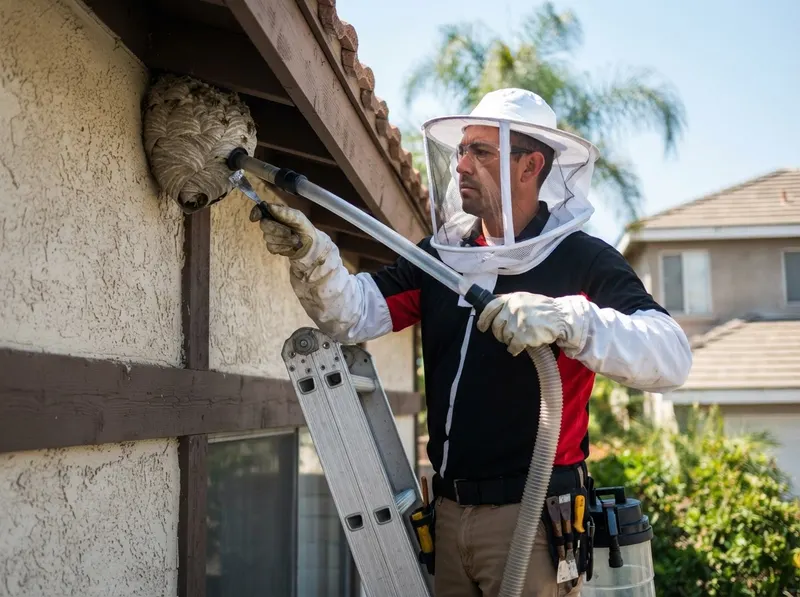
Stinging insect nest extraction serves as an architectural perimeter containment measure rather than an indiscriminate surface treatment. When aerial colonies or subterranean species colonize building envelopes, simple aerosol broadcasting leaves the structural comb intact, attracting carpet beetles, secondary scavengers, and recurring scout insects. In older mid-century residences in Silver Lake and historic Spanish-revival bungalows in Los Feliz, paper wasps routinely anchor beneath decorative clay tile eaves, exposed rafter tails, and porch ceilings. Ground-nesting yellowjackets exploit irrigation line cavities throughout hillside properties in Sherman Oaks and Encino, threatening structural footings and outdoor living zones. Mechanical extraction pairs botanical-based contact pyrethrins approved under the EPA pesticide regulations with specialized HEPA-filtered vacuum draw, completely capturing the adult defensive workforce before detaching the cellular brood mass. This protocol aligns with integrated pest management frameworks defined by the UC Statewide IPM Program, which prioritizes non-chemical physical removal of insect biomass over heavy continuous pesticide loads.
Cavity-bound infestations present elevated engineering demands. When yellowjackets infiltrate weep screeds, attic soffits, or exterior stucco fissures in coastal Brentwood and Pacific Palisades, technicians bypass destructive wall demolitions by deploying micro-injection probes. Following insect immobilization, the void is mechanically evacuated. The vector is then protected using non-corrosive stainless mesh, conforming to structural barrier practices recognized by the California Department of Pesticide Regulation and the National Pest Management Association. Properties in dense urban pockets like Koreatown and Boyle Heights often feature high-density zero-lot-line configurations where exterior eaves border shared public sidewalks. Technicians apply directional containment shrouds during daylight extractions to block displaced, defensive workers from dispersing onto public thoroughfares, satisfying urban biosecurity recommendations issued by the National Institute for Occupational Safety and Health. For bee swarms requiring ecological recovery, technicians adhere to colony protection standards outlined by the California Department of Food and Agriculture, transferring viable honeybee populations directly to licensed apiary partners.
Subterranean yellowjacket extraction follows strict excavation limits. In expansive parcel properties bordering natural brush near Elysian Park and Highland Park, subterranean colonies frequently occupy abandoned rodent burrows or degraded root systems. Complete structural extraction requires uncovering the underground spherical combs, collecting subterranean queens, and backfilling the excavated chambers with compacted gravel to prevent re-colonization. Structural containment adheres to worker safety clearances established by the Occupational Safety and Health Administration for elevated ladder operations and confined attic crawl spaces. Property owners avoid multi-year chemical subscription traps through this definitive mechanical remediation: 1. Digital diagnostic inspection and thermal imaging of interior voids; 2. Enclosed containment zone setup using high-volume vacuum systems; 3. Targeted contact knockdown and physical comb excision; 4. Enzyme-based pheromone cleansing of structural substrates; 5. Copper-mesh or metal flashing installation to permanently seal entrance apertures under local building codes administered by the Los Angeles Department of Building and Safety. All chemical formulations applied strictly meet container disposal guidelines verified by Earth911 hazardous recycling networks and clean water runoff thresholds monitored by the Los Angeles Regional Water Quality Control Board.
Every job gets a firm, written price after a free on-site visit.
For standards, safe disposal, and service guidance on pest control services in Los Angeles, CA, useful references include U.S. EPA, ENERGY STAR, U.S. Dept. of Energy, Consumer.gov, U.S. Census Bureau, and Google Maps. General consumer and small-business resources are available from USA.gov, Better Business Bureau, FTC Consumer Advice, U.S. Small Business Administration, and Ready.gov.
Tell us about your stinging insect nest extraction job in Los Angeles and we'll send a clear, written quote, usually the same day.
 CopperLine Pest Services