Structural heat decontamination addresses the defensive biological resistance bed bugs develop against traditional synthetic pyrethroids. Research supported by the Agricultural Research Service indicates that exposing…
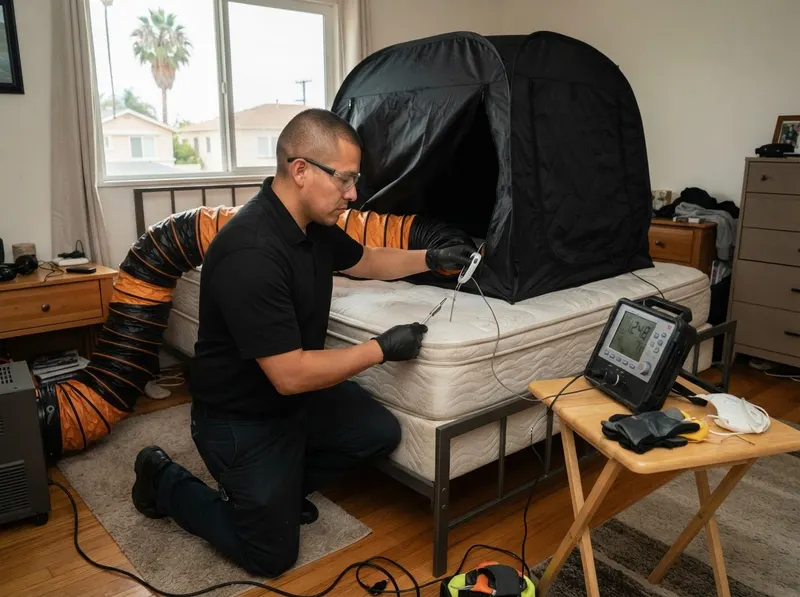
Structural heat decontamination addresses the defensive biological resistance bed bugs develop against traditional synthetic pyrethroids. Research supported by the Agricultural Research Service indicates that exposing Cimex lectularius to ambient conditions exceeding 118°F denatures vital cellular enzymes within 90 minutes, whereas maintaining 122°F yields rapid lethal disruption across adults, nymphs, and eggs. Unlike surface insecticide sprays, forced hot air penetrates deep into structural framing, hardwood floor joists, and architectural moldings found throughout older residences in Los Feliz, Silver Lake, and Boyle Heights. The mechanical equipment relies on high-output electric heaters or remote indirect hydronic systems, adhering to combustion emissions standards under the South Coast Air Quality Management District to safeguard indoor atmospheric air quality. CopperLine Pest Services deploys discreet, unmarked utility vehicles to maintain client privacy during structural setups.
Thermal remediation offers decisive technical advantages over repeated pesticide applications or structural fumigation. Gas fumigation under the regulatory framework of the California Department of Pesticide Regulation necessitates multi-day residential evacuations, full utility disconnects, and extensive exterior tarping. In contrast, thermal remediation completes in a single 6 to 8 hour continuous run, enabling residents in Brentwood, Encino, and Pacific Palisades to return home the same evening. The trade-off centers on heat prep: occupants must remove meltable items such as wax, oil paintings, pressurized aerosols, and temperature-sensitive prescription drugs documented by the U.S. Food and Drug Administration. Electronic enclosures can remain in the structure, provided internal fans circulate air evenly around devices following guidelines set by the National Institute of Standards and Technology for equipment thermal exposure.
System execution requires continuous temperature logging across spatial perimeter zones to eliminate cool spots where insects might seek thermal refuge. Industrial high-volume air movers direct thermal currents into concrete foundation gaps, subflooring, and architectural voids prevalent in vintage apartment buildings across Koreatown and Highland Park. Technicians track surface thermal readings with calibrated diagnostic equipment certified under ASTM International protocols, verifying that interior wall voids achieve sustained target lethal heat. Electrical feeds conform to National Fire Protection Association electrical safety standards to eliminate overload hazards on residential breaker panels. For dense multi-family properties near Venice and Sherman Oaks, physical exclusion barriers seal plumbing penetrations and shared conduit channels, preventing transient insect migration during heating cycles.
Every job gets a firm, written price after a free on-site visit.
For standards, safe disposal, and service guidance on pest control services in Los Angeles, CA, useful references include U.S. EPA, ENERGY STAR, U.S. Dept. of Energy, Consumer.gov, U.S. Census Bureau, and Google Maps. General consumer and small-business resources are available from USA.gov, Better Business Bureau, FTC Consumer Advice, U.S. Small Business Administration, and Ready.gov.
Tell us about your bed bug thermal remediation job in Los Angeles and we'll send a clear, written quote, usually the same day.
 CopperLine Pest Services