CopperLine Pest ServicesCopperLine Pest Services

Architectural Rodent Exclusion Los Angeles

Los Angeles features distinct architectural styles across microclimates that present specific vulnerability vectors for commensal rodents. In hillside properties throughout Silver Lake, Los Feliz, and Pacific…
Get My Free Estimate →(424) 540-2745
Architectural Rodent Exclusion in Los Angeles, CA
Quick answer
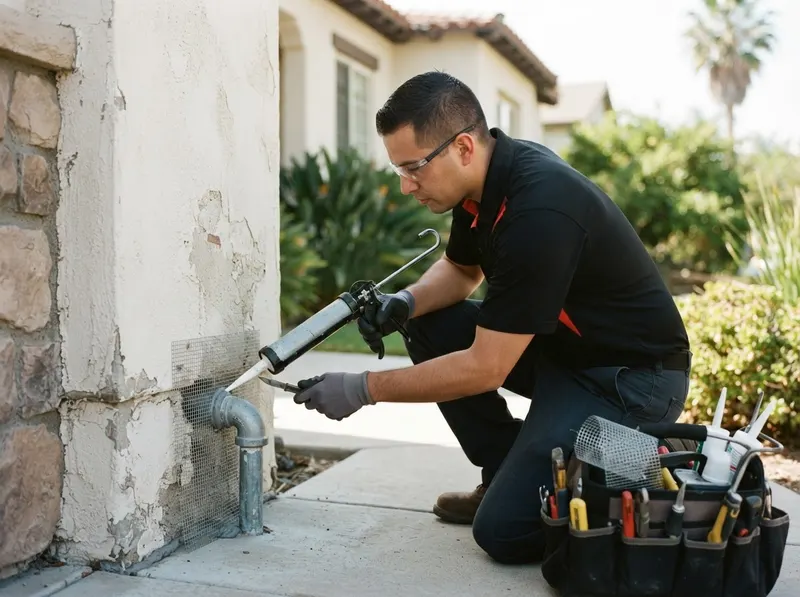
  • Included: Comprehensive digital photo inspection of rooflines, sub-areas, plumbing penetrations, crawlspaces, and foundation weep holes, followed by permanent physical barrier installation using 19-gauge galvanised steel mesh and metal flashing.
  • Dispatch Timeline: On-site structural assessments are scheduled across Los Angeles County within 24 to 48 hours of intake, Monday through Saturday.
  • Cost Baseline: Baseline assessment and targeted breach sealing starts at a minimum charge of $200, with comprehensive whole-structure envelope closures ranging between $1,200 and $4,500 depending on linear footage and architectural complexity.
  • Pest Scope: Engineered specifically for roof rats (Rattus rattus), Norway rats (Rattus norvegicus), and house mice (Mus musculus) exploiting structural apertures down to 0.25 inches.
  • Intake Procedure: Structural evaluations are arranged by phone at (424) 540-2745 or via direct photographic transmission of suspected perimeter breaches for initial technician review.

Los Angeles features distinct architectural styles across microclimates that present specific vulnerability vectors for commensal rodents. In hillside properties throughout Silver Lake, Los Feliz, and Pacific Palisades, multi-level framing and exterior deck interfaces often rest against steep brush embankments, creating direct elevated pathways for roof rats. In mid-century raised-foundation residences in Sherman Oaks and Encino, foundation crawlspace vents and perimeter sill plates decay under soil moisture, permitting ground-level ingress by Norway rats.

Meanwhile, dense urban multi-family footprints in Koreatown, Boyle Heights, and Highland Park typically experience penetrations along shared utility chases, conduit sleeves, and parapet coping lines where seismic settling has opened unmonitored masonry fissures. 5 inches, granting unimpeded access to attic crawlspaces.

Architectural exclusion establishes a rigid perimeter defense, differing fundamentally from chemical suppression or traditional baiting.

Where baiting merely manages animal volume without addressing structural failure, physical containment treats the building envelope as an engineered system. gov">California Structural Pest Control Board. org">ASTM International compliant hot-dipped galvanized hardware cloth behind crawlspace ventilation louvers, forming custom-bent 26-gauge sheet metal flashing across rake-edge eaves, and packing copper mesh (Stuf-fit) saturated with polyurethane expanding sealants into high-movement plumbing and electrical penetrations.

These non-corrosive barrier assemblies resist gnawing pressures that defeat standard foam sealants.

Standard deployment sequence across residential and light commercial envelopes follows three definitive stages: 1. 25 inches), using high-resolution digital imaging to catalog weep holes, junction boxes, crawlspace hatches, and roof intersections.

2. Mechanical closure is performed using materials matched to the architectural substrate, attaching galvanized barriers with self-tapping masonry fasteners or stainless steel framing staples, followed by the installation of one-way containment exit doors where active interior harboring exists. 3.

Interior verification and attic insulation assessment occur after a 5 to 10-day monitoring period, confirming that all resident vectors have evacuated the envelope before final permanent closure of the one-way release mechanisms.

Executing complete architectural containment involves balancing upfront material durability against structural modifications. gov">South Coast Air Quality Management District volatile organic compound rules to preserve visual integrity.

The trade-off between localized patch work and full-envelope fortification is longevity: sealing single breaches under $500 addresses immediate access points, but unsealed secondary vents across an unfortified roofline allow displaced rodents to establish alternative entry within 14 to 28 days. CopperLine Pest Services provides transparent photo diagnostics so property owners evaluate exact physical compromises before committing to multi-vector exclusion installations.

Architectural Rodent Exclusion cost in Los Angeles

Targeted Single-Vector Entry Seal (Minimum Charge)$200 - $350
Crawlspace Foundation Vent Exclusion (Complete Sub-Area, 8-12 Vents)$450 - $850
Spanish Tile Eave & Barrel Gap Enclosure (Standard Residential Roofline)$800 - $1,600
Full-Structure Residential Exclusion Package (Sub-Area, Utilities & Roofline)$1,200 - $3,200
Complex Hillside or Multi-Level Architecture Exclusion (Over 3,500 sq ft)$2,200 - $4,500

Every job gets a firm, written price after a free on-site visit.

Common questions

How does architectural rodent exclusion differ from standard pest control in Los Angeles?
Architectural rodent exclusion replaces recurring poison bait programs with permanent physical construction repairs that seal exterior structural voids down to 0.25 inches. Standard Los Angeles extermination relies on exterior rodenticide boxes regulated by the California Department of Pesticide Regulation, which suppress exterior populations temporarily without stopping rodents from penetrating attic, wall, and subfloor voids.
What materials are used to seal rodent entry points across Los Angeles properties?
Physical exclusion uses 19-gauge galvanized steel hardware cloth, 26-gauge galvanized sheet metal flashing, pure copper knitted wire mesh, and pest-grade polyurethane sealants rated by the Underwriters Laboratories for fire safety. Standard materials like spray foam, plastic screens, and wood lath are excluded because adult rats can chew through standard consumer-grade sealants within 48 hours.
How long does a full architectural rodent exclusion take on a Los Angeles home?
Standard structural exclusion projects across single-family Los Angeles properties take between 1 and 3 days of on-site labor depending on the building footprint and roof pitch. Technicians finish exterior structural closures on day one, mount temporary one-way exit cones over primary run paths, and return 5 to 7 days later to evaluate interior activity according to National Pest Management Association exclusion standards before removing the exit assemblies and sealing the final breach.
Does architectural exclusion solve active attic infestations in Los Angeles?
Architectural exclusion stops the influx of new animals by sealing all entry vectors, while interior snap-trap lines rapidly clear animals trapped inside the building perimeter. Once structural seals are verified, technicians inspect the attic to quantify insulation damage and check structural joists against building standards monitored by the Los Angeles Department of Building and Safety.
What is the minimum cost for rodent exclusion service in Los Angeles?
The minimum baseline charge for any localized mechanical closure or diagnostic site visit by CopperLine Pest Services is $200. Total investment scales based on building linear footage, vertical access demands, roofline configuration, and crawlspace ventilation requirements, with full residential projects averaging $1,200 to $3,200 across Los Angeles County.

For standards, safe disposal, and service guidance on pest control services in Los Angeles, CA, useful references include U.S. EPA, ENERGY STAR, U.S. Dept. of Energy, Consumer.gov, U.S. Census Bureau, and Google Maps. General consumer and small-business resources are available from USA.gov, Better Business Bureau, FTC Consumer Advice, U.S. Small Business Administration, and Ready.gov.

Get started today

Tell us about your architectural rodent exclusion job in Los Angeles and we'll send a clear, written quote, usually the same day.

Get your free pest control services quote, Los Angeles

We only use your ZIP to check availability, no spam.