Securing reliable pest control services Los Angeles property owners can verify requires strict perimeter inspection and precise species identification. CopperLine Pest Services provides structural pest mitigation throughout Los Angeles County, stopping active wood-destroying organisms, invasive ant trails, and roof rat intrusions before interior building materials suffer irreversible damage.
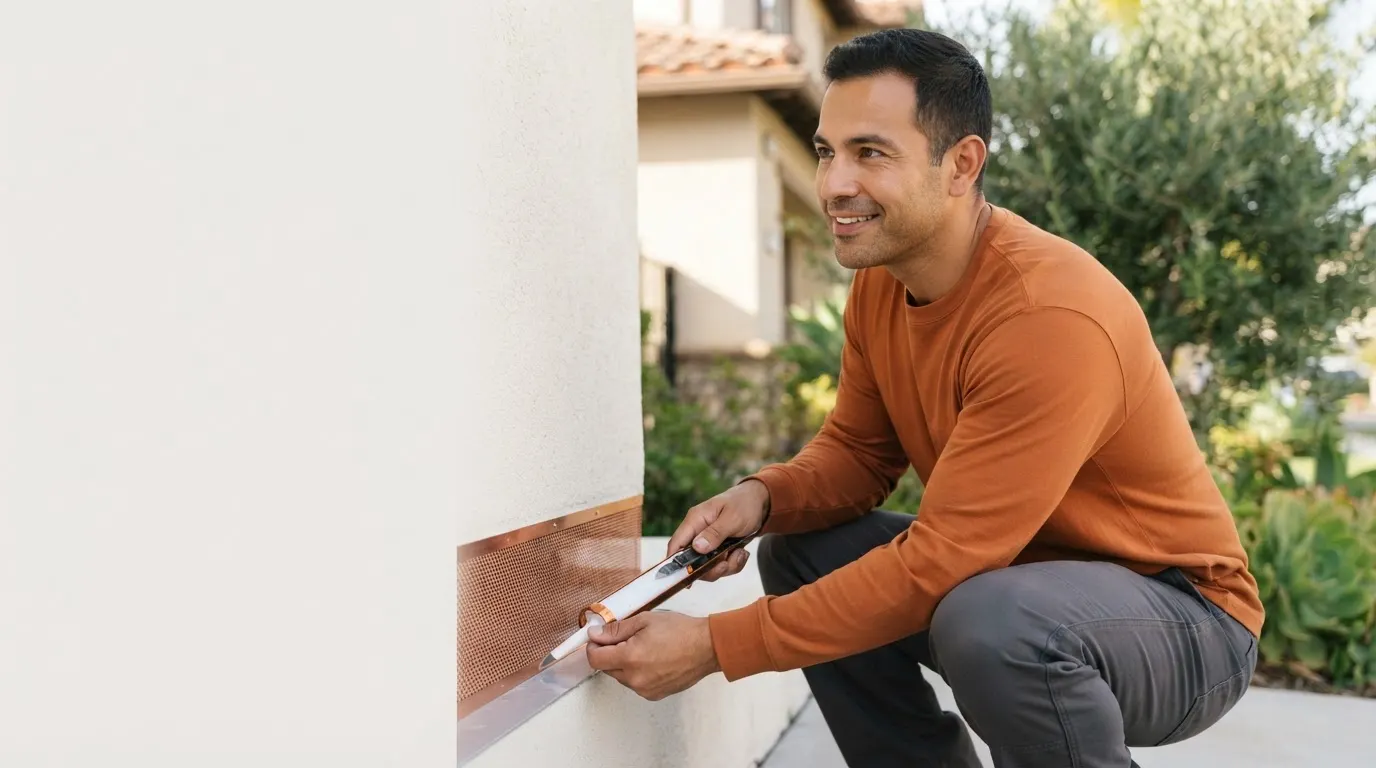
A professional pest control services company in Los Angeles is a state-regulated structural defense contractor that inspects, excludes, and eliminates insect and vertebrate infestations within residential and commercial building envelopes.
Every service reflects the same meticulous attention to detail, whether it's a single job or a larger pest control services project across Los Angeles.
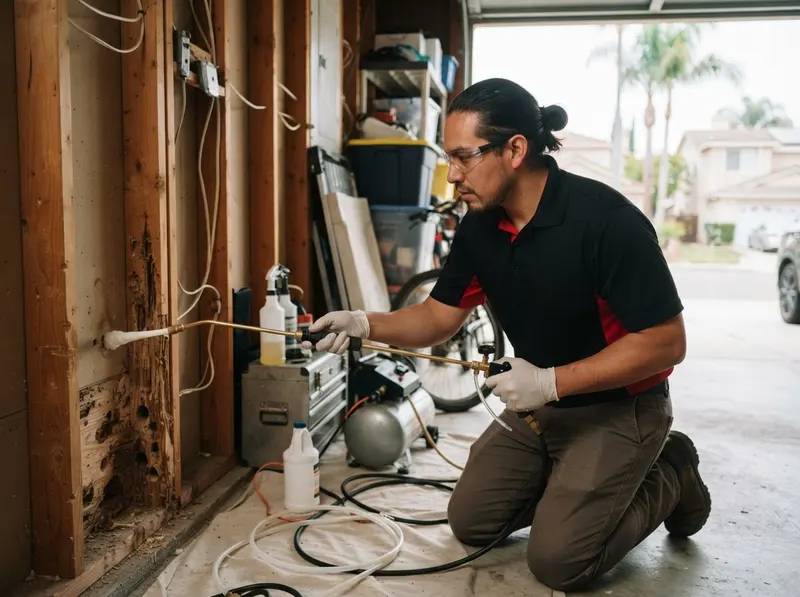
Precision borate salt infusion, foam void filling, and localized thermotherapy applied directly into target timber galleries across exposed structural framing, rafter tails, fascia boards, and door headers. Technicians utilize acoustic detection and thermal imaging to isolate wood-destroying galleries within structural softwoods, eliminating the colony without requiring structural tenting, bagging of food goods, or multi-day property evacuation. Work is verified using moisture meters and fiber-optic borescopes to guarantee complete active-void penetration along wood grains under guidance published by the California Structural Pest Control Board .
Get a quote →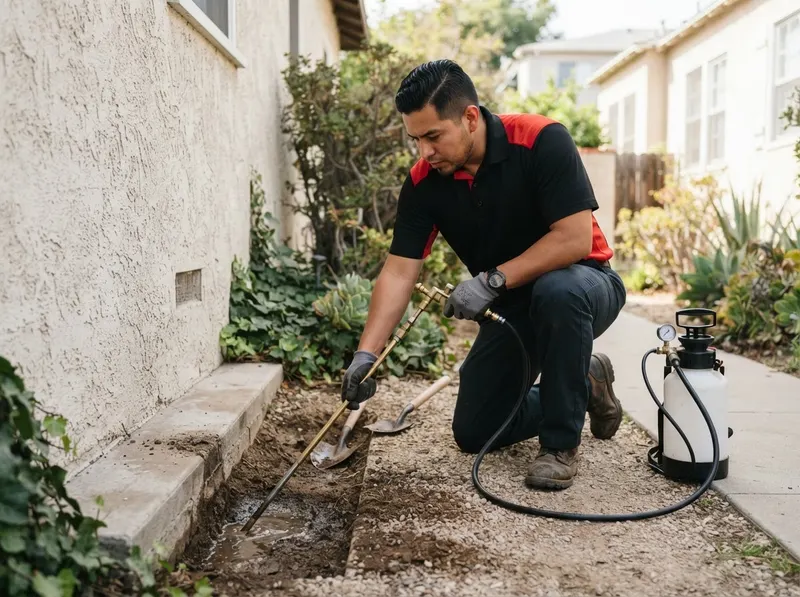
Continuous perimeter liquid termiticide barriers and sub-slab pressure injections engineered to sever subterranean termite mud foraging tubes entering through foundation cracks, cold joints, and plumbing chases. Soil trenching along stem walls reaches depths of six inches to bond non-repellent termiticide molecules to soil particles, creating an undetectable chemical zone that worker termites track directly back into subsoil brood chambers. When treating post-tension or monolithic slabs, diamond core drills place micro-ports every twelve inches through exterior flatwork to saturate critical footing vectors based on soil treatment guidelines from the EPA Office of Pesticide Programs .
Get a quote →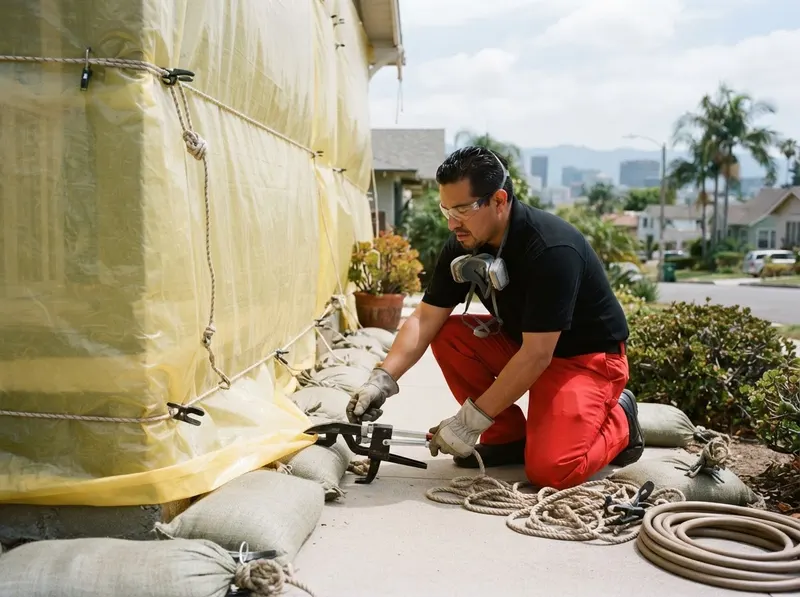
Engineered whole-building containment employing heavy vinyl-coated nylon tarpaulins and sulfuryl fluoride gas fumigation to penetrate dense structural framing, interstitial floor cavities, and roofing assemblies. Calculated dosage factors account for ambient temperature, barometric pressure, wind velocity, and building volume to ensure the gas reaches lethal concentration-time thresholds against all life stages of drywood termites and wood-boring beetles. Structural clearing utilizes high-volume aeration fans followed by multi-point clearance testing using calibrated digital halide detectors to verify interior air quality reaches 1 part per million or lower before certifying re-entry.
Get a quote →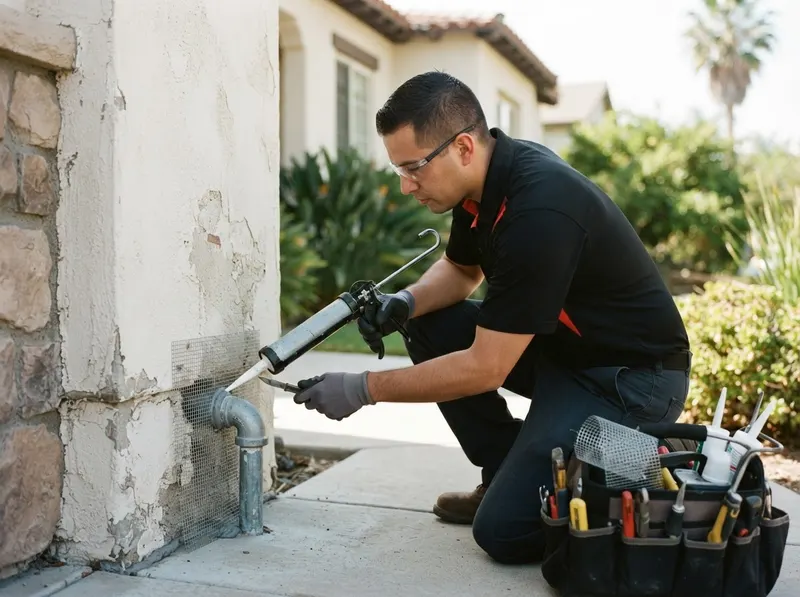
Comprehensive structural envelope fortification utilizing 19-gauge hot-dipped galvanized steel hardware cloth, pure copper wire mesh, and commercial elastomeric polyurethanes to permanently block vertebrate points of ingress. Technicians seal roof junctions, rafter overhangs, open foundation weep screeds, crawlspace ventilation louvers, and HVAC conduit channels down to one-quarter-inch tolerances to stop roof rats (Rattus rattus) and house mice (Mus musculus). Sealing protocols follow structural design standards outlined by the California Department of Public Health Vector-Borne Disease Section to eliminate access points without restricting required passive attic airflow.
Get a quote →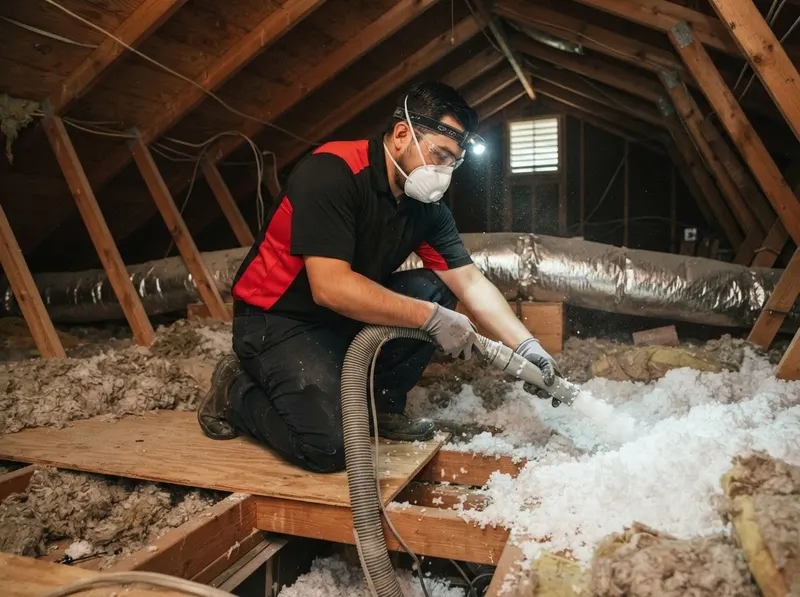
Removal of rodent-damaged, urine-saturated fiberglass batts or loose-fill cellulose insulation using industrial negative-air vacuum machines exhausting to the exterior of the structure. Technicians remove dry feces, nesting material, and biological hazards before executing full structural HEPA vacuuming of joist plates and top plates. The entire structural envelope receives an application of EPA-registered virucidal, bactericidal, and fungicidal sanitizing mist to neutralize pathogenic zoonotic risks, followed by the installation of clean borate-treated thermal cellulose insulation meeting Class A fire-retardant standards and thermal resistance values up to R-38.
Get a quote →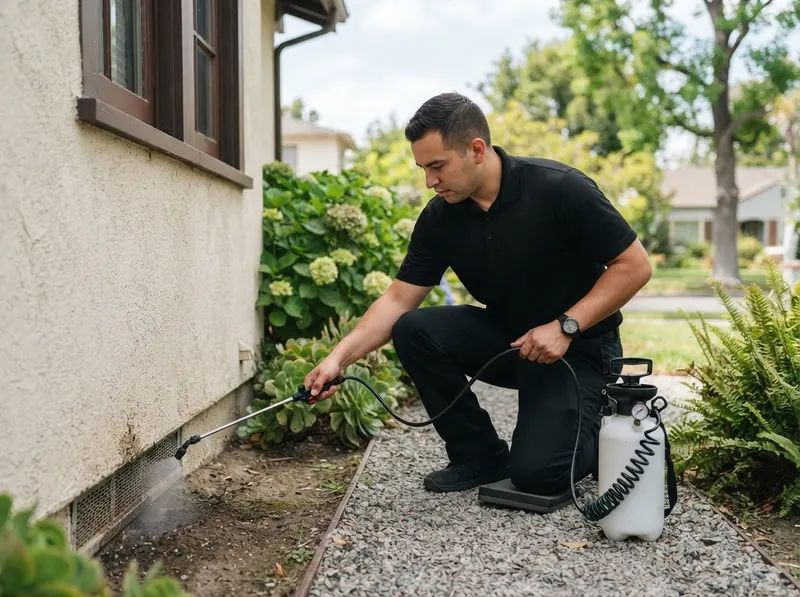
Multi-tiered architectural perimeter defense targeting invasive Argentine ants (Linepithema humile) using non-repellent transfer liquid active ingredients and specialized baiting reservoirs along exterior foundational perimeters. Because Argentine ant supercolonies contain multiple egg-laying queens across interconnected nests, repellent pyrethroids cause colony budding; our protocol deploys slow-acting, fipronil- or chlorfenapyr-based horizontal transfer barriers. Technicians clear dense soil-to-wood ground contact, treat structural weep lines, and install low-profile tamper-resistant liquid carbohydrate dispensers along moisture corridors to achieve systemic eradication across surrounding landscape zones.
Get a quote →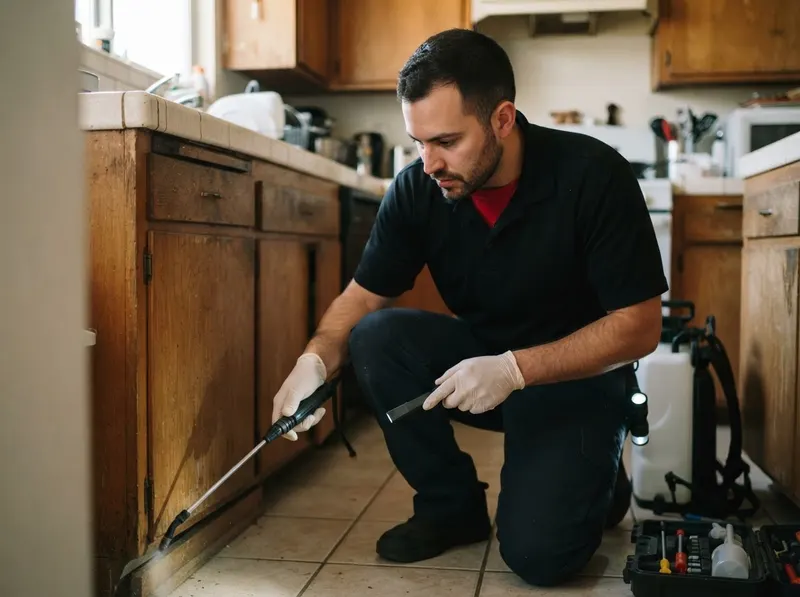
Surgical crack-and-crevice cleanouts engineered to eliminate persistent German cockroach (Blattella germanica) and American cockroach (Periplaneta americana) infestations within interior food-prep spaces, electrical channels, and wet wall chases. Technicians deploy high-potency non-repellent baits, macrocyclic lactones, and juvenile hormone mimics (insect growth regulators) that arrest nymphal molting cycles and cause adult sterility. Wall voids around kitchen plumbing risers receive electrostatic applications of dry amorphous silica dust, cutting insect lipid epicuticles to deliver mechanical mortality without chemical resistance risks or pesticide runoff into domestic water systems.
Get a quote →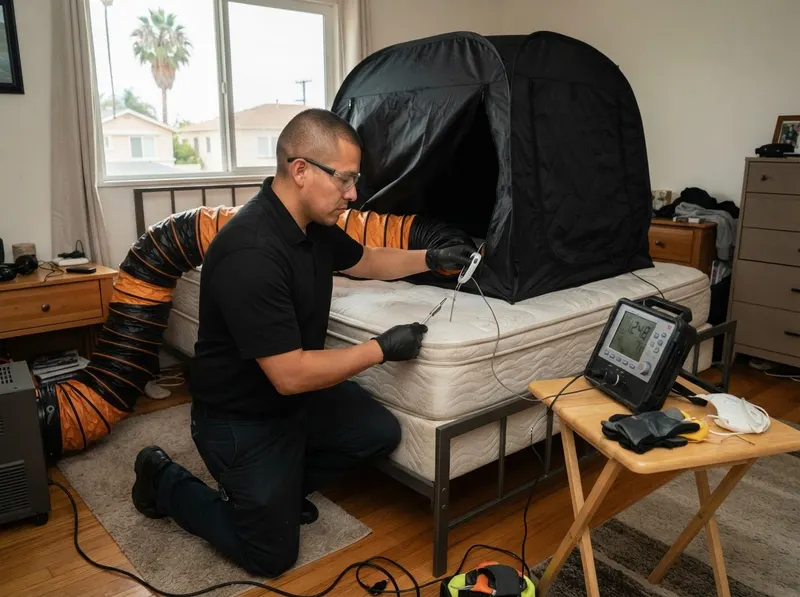
Whole-room or whole-structure high-temperature thermodynamic eradication elevating structural cavities and interior furnishings to continuous lethal temperatures between 122 and 135 degrees Fahrenheit. Specialized electric or indirect fired mobile heating units circulate high-velocity heated airflow through wall baseboards, mattress cores, and deep upholstery fabrics, neutralizing heat-sensitive proteins within all developmental life stages, including cryptic eggs. Wireless temperature sensor arrays monitor structural core thermal saturation in real time, following technical treatment guidelines established by the National Pest Management Association to ensure total mortality in a single service deployment.
Get a quote →You get a firm, itemized quote for your pest control services before any work begins, no surprises, no pressure.
Careful prep, tidy work, and a full cleanup when we are done. We treat your home and belongings like our own.
The same trusted, background-checked team from the first call to the final check.
Selecting appropriate structural defense depends on infestation depth, pest biology, and structural configuration. For drywood termite colonies restricted to localized trim boards, exposed rafter tails, or isolated door headers, precision borate injection or localized thermotherapy resolves the issue without resident displacement; if wood-destroying galleries span inaccessible wall voids, attic purlins, and subflooring across multi-story frames, structural tent fumigation with sulfuryl fluoride becomes mandatory. The operational trade-off centers on cost and site accessibility: localized injection preserves occupancy and avoids exterior landscape disturbance, whereas whole-structure fumigation demands complete tenant vacancy and exterior plant clearance for 48 to 72 hours.
For exterior rodent activity around garden beds, foundational tamper-resistant rodent baiting stations provide population suppression; conversely, when roof rats or mice breach attic insulation or floor joists, secondary exterior baiting alone fails to solve interior colonization. Interior breaches require physical architectural exclusion, where technicians seal weep screeds, crawlspace screens, and roofline transitions with galvanized hardware cloth, copper mesh, and elastomeric sealants. The trade-off is mechanical effort and installation investment versus recurring interior contamination: mechanical exclusion incurs higher initial labor but permanently closes physical access paths without introducing toxic bait blocks into interior living zones.
For invasive Argentine ant infestations, perimeter broadcast spraying of repellent pyrethroids provides rapid knockdown of foraging trails along concrete walkways; however, this approach triggers colony budding, splitting one mega-colony into several autonomous reproductive nests within interior wall cavities. The preferred technical route utilizes non-repellent liquid formulations paired with slow-acting liquid carbohydrate baits, allowing foraging workers to transfer the active toxicant to multi-queen chambers. The trade-off is remediation velocity versus long-term colony collapse: repellent sprays deliver immediate visual clearance within hours but worsen structural infestations long-term, while non-repellent transfer chemistry requires two to three weeks to achieve complete structural suppression.
When managing German cockroach colonizations in multi-family plumbing voids, broad-spectrum fogging disperses nymphs deeper into dry framing bays; precision crack-and-crevice gel applications paired with insect growth regulators halt chitin synthesis and lifecycle maturation at the specific harborage vector. The decision between thermal bed bug remediation and residual chemical application follows a similar structural dynamic: structural heating eradicates pesticide-resistant egg stages in a single eight-hour cycle but requires substantial power distribution equipment and heat-sensitive item removal, whereas targeted chemical applications require three distinct service rounds spaced 14 days apart with lower single-treatment financial expenditure. Understanding these structural boundaries ensures property assets remain protected without superfluous chemical exposure.
Structural inspection data and moisture readings determine the mechanical intervention before any application begins, preserving indoor environmental quality while establishing an impenetrable perimeter line.
Every project gets a firm, written price after a free on-site visit. Ranges below for orientation.
Tell us about your pest control services job and we'll send a clear, written quote, usually the same day. Or just call and talk to a real Los Angeles pro.
(424) 540-2745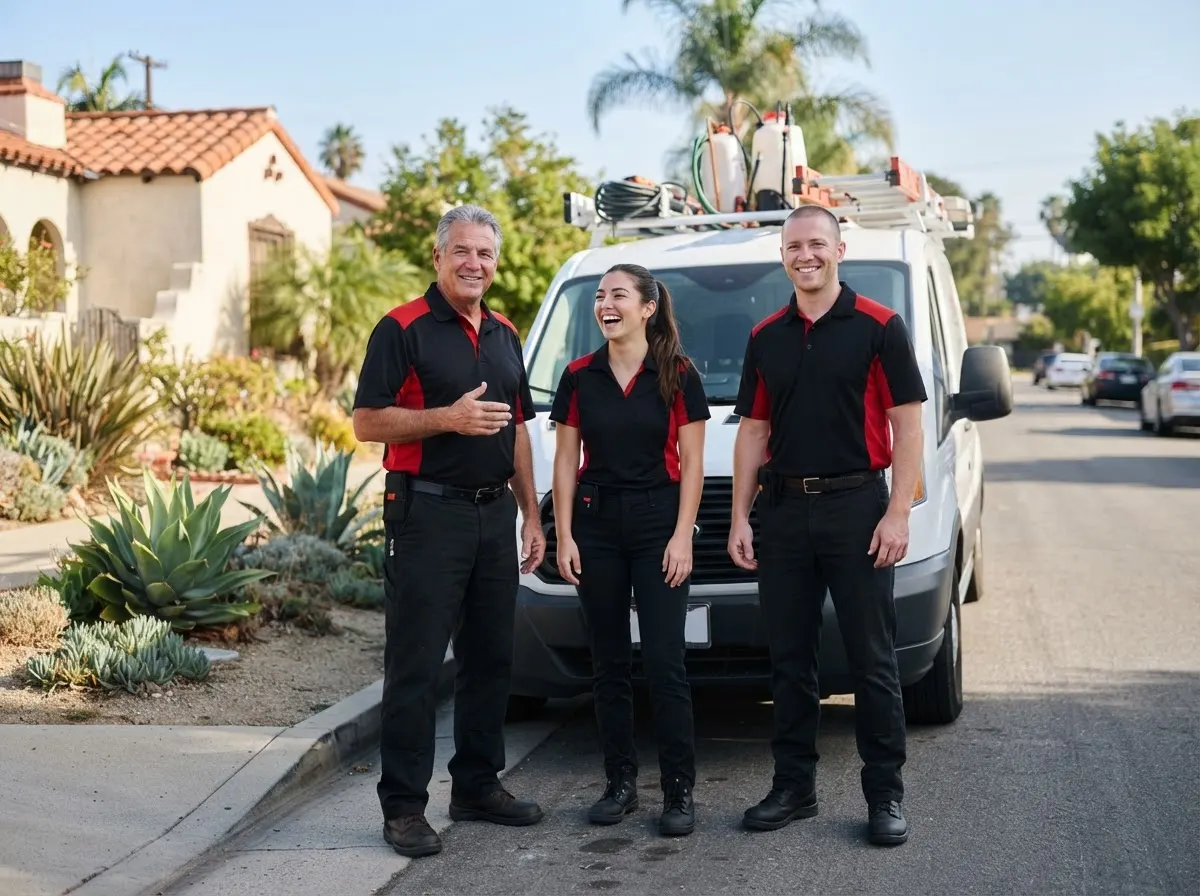
Los Angeles features extreme topography, distinct microclimates, and diverse architectural typologies that dictate hyper-local pest vulnerabilities. In hillside foothill zones like Los Feliz and Silver Lake bordering Griffith Park, and Highland Park near the Arroyo Seco, structures face relentless roof rat incursions driven by continuous canopies of California live oak, mature eucalyptus, and invasive English ivy. These properties feature raised wood-frame construction with post-and-pier foundations and expansive crawlspaces that invite vertebrate tunneling and subterranean termite foraging through vulnerable subfloor joists. Conversely, valley communities like Encino and Sherman Oaks bordering the Sepulveda Basin Recreation Area sit within an alluvial basin characterized by high summer ambient temperatures exceeding 100 degrees Fahrenheit. Here, modern and ranch-style slab-on-grade foundations expand and contract along natural clay soils, opening structural cold joints and weep screeds to massive Argentine ant supercolonies seeking interior water sources during dry heatwaves. In coastal pockets like Venice and Pacific Palisades, marine layer humidity and salt-laden ocean air preserve softwood rafter tails, architectural exposed fascia, and historic shingle siding. This elevated moisture creates prime conditions for western drywood termite swarms that crest from late August through November, entering structures through tiny vent louvers and exposed decorative timber junctions. Dense urban corridors like Koreatown and Boyle Heights present distinct structural challenges: historic multi-family apartment buildings and mixed-use masonry framing with complex, shared plumbing chases and interior hollow-block walls allow German cockroaches to traverse entire building footprints via concealed utility conduits. These varied geographic factors demand targeted mechanical exclusion and precise species-specific chemical methods calibrated to local soil conditions, structural ages, and environmental exposures rather than uniform spray routes.
Free estimates for Los Angeles & the surrounding area.
For standards, safe disposal, and service guidance on pest control services in Los Angeles, CA, useful references include U.S. EPA, ENERGY STAR, U.S. Dept. of Energy, Consumer.gov, U.S. Census Bureau, and Google Maps. General consumer and small-business resources are available from USA.gov, Better Business Bureau, FTC Consumer Advice, U.S. Small Business Administration, and Ready.gov.
 CopperLine Pest Services